News Detail
24
Oct
Composition and function of the valve assembly
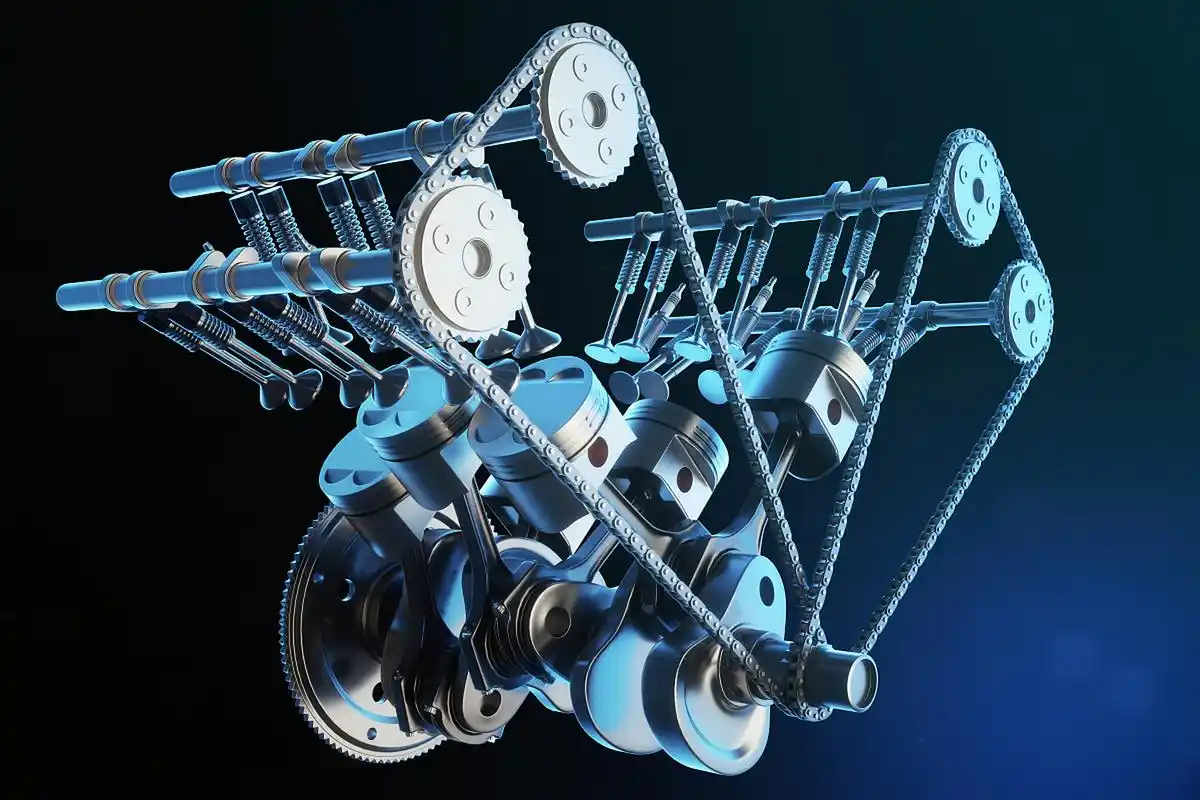
The valve train mainly consists of valves, valve springs, and valve lock clips. Typically, the intake port diameter is larger than the exhaust port diameter to increase intake volume, thereby improving combustion efficiency and resulting in better power output. The intake and exhaust valves of a car engine are mushroom-shaped valves, consisting of a valve head and a valve stem. The valve top surface can be flat, concave, or convex. Currently, the flat-top valve is the most widely used due to its simple structure, ease of manufacturing, and small heat-receiving area. Both can be used.
The valve and valve seat or valve seat ring are sealed by a conical surface. The angle between the valve cone surface and the valve top surface is called the valve cone angle. The valve cone angles for intake and exhaust valves are generally 45 degrees, with only a few engines having an intake valve cone angle of 30 degrees.
The function of the valve assembly is to control the intake and exhaust of each cylinder via pushrods driven by the camshaft, thus enabling the normal operation of the engine.